

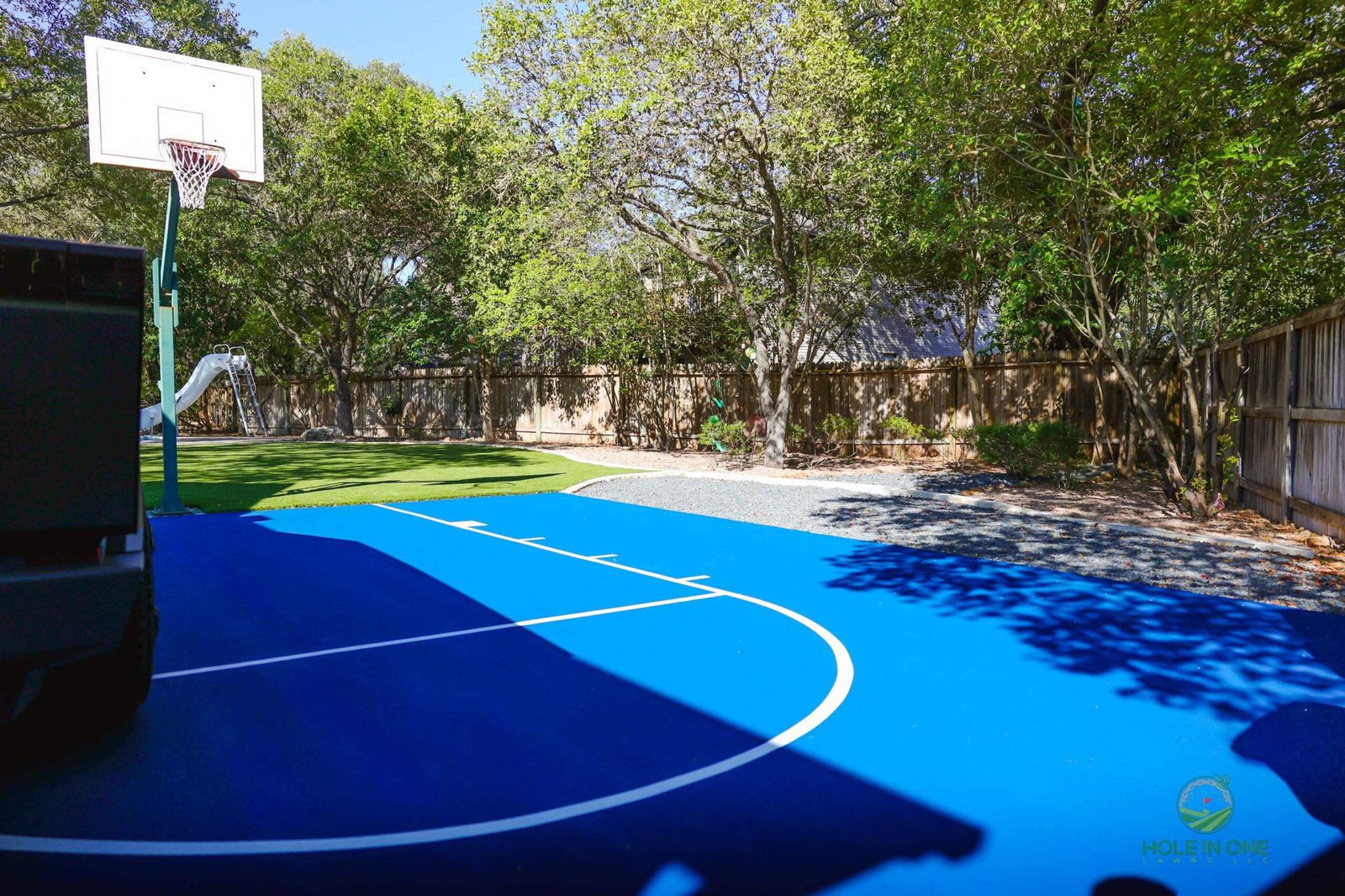
A backyard pickleball court is one of the most requested projects we design and build across San Antonio and the Hill Country. Families want a place to play, host friends and stay active without driving to a crowded park. But a court that plays well and lasts takes more planning than most homeowners expect. This guide walks through how a design-build team approaches a residential pickleball court, from the first site walk to the final line painting.
Why Pickleball Courts Are Booming in San Antonio
Pickleball is easy to learn, social and playable year-round in our climate. A regulation court is 20 by 44 feet, with recommended run-off space around it, so it fits on many suburban lots that could never hold a full tennis court. That small footprint is exactly why more homeowners are turning unused side yards and back corners into a dedicated sport court.
If you are weighing the idea, start with our sport court construction page to see the range of surfaces and layouts we build, including pickleball, padel and basketball.
Step One: Site Evaluation and Layout
Every good court begins with the ground. We look at slope, drainage, tree roots, utilities and access for equipment. Texas soils range from expansive clay to shallow limestone, and both affect how the base is built. Orientation matters too: a court running north to south reduces low-sun glare during morning and evening games.
The layout phase is where design earns its keep. We map the court, fencing, entry gate, seating area and lighting so everything works together instead of being added piece by piece. For homes in neighborhoods like Stone Oak, we also consider HOA guidelines, setbacks and sight lines from neighboring properties.
Step Two: Grading, Drainage and Base
The most common reason a court fails early is water. A pickleball surface needs a gentle, consistent slope so rain moves off quickly, and the base underneath must stay stable through wet and dry cycles. We shape the grade, install drainage where it is needed, and build a compacted aggregate base before any surfacing goes down. This is the unglamorous part of the job, and it is the part that determines whether the court is still flat and playable years from now.
Step Three: Choosing the Surface
There are several surface options, and the right one depends on how you plan to use the court.
- Acrylic coating over concrete: the classic hard court feel, with consistent ball bounce and many color choices.
- Cushioned systems: added layers that soften impact on knees and joints for frequent players.
- Modular tiles: interlocking panels that drain well and install quickly over a suitable base.
Color is more than looks. Contrasting in-bounds and out-of-bounds colors help players track the ball, and lighter tones can keep the surface a little cooler in summer.
Step Four: Fencing, Lighting and Court Features
A fence keeps balls on the property and gives the court a finished look. Lighting extends play into the cooler evening hours, which is when most families in South Texas actually use their courts. We plan lighting to avoid glare for players and spill onto neighboring yards. Add-ons such as a windscreen, bench seating, a shade structure or a small outdoor kitchen nearby turn the court into a complete outdoor living space.
Step Five: Lines, Nets and Final Details
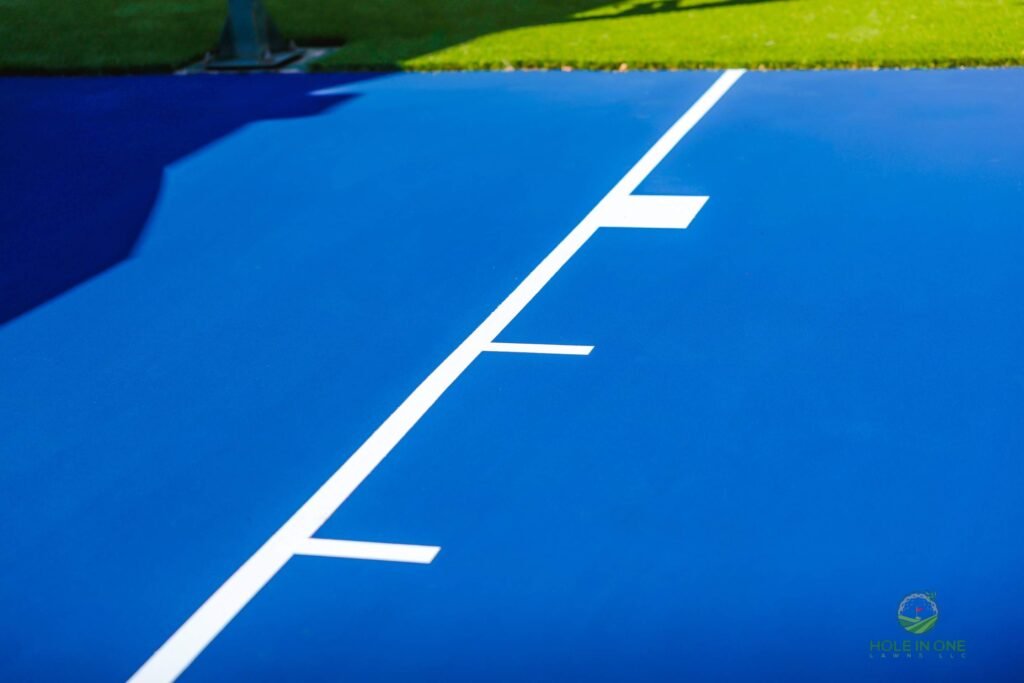
Once the surface has cured, we paint regulation lines, set the net posts and walk the court with the homeowner to confirm everything plays and drains correctly. Because one team handles design, grading, surfacing and finishing, there are no handoffs between separate contractors and no gaps in responsibility.
How Long Does It Take?
Timelines vary with site conditions, surface choice and permitting, but most residential courts move through design, base work, surfacing and finishing over several weeks. Weather matters, since concrete and coatings need dry conditions to cure properly. We give each client a schedule after the site evaluation so there are no surprises.
Combine the Court With the Rest of Your Yard
Many of our clients pair a court with other features: a putting green beside the court, a paver patio for spectators, shade structures and landscape lighting. Planning these together from the start keeps the whole yard cohesive and often makes construction more efficient. Our team handles landscape design and build under one roof, so the court becomes part of the overall plan rather than an afterthought.
Common Questions
Can a court fit on a smaller lot? Often yes. A pickleball court needs roughly 30 by 60 feet including run-off, which is far less than tennis.
Is a permit required? It depends on your city, HOA and the scope of the work. We review requirements during the design phase.
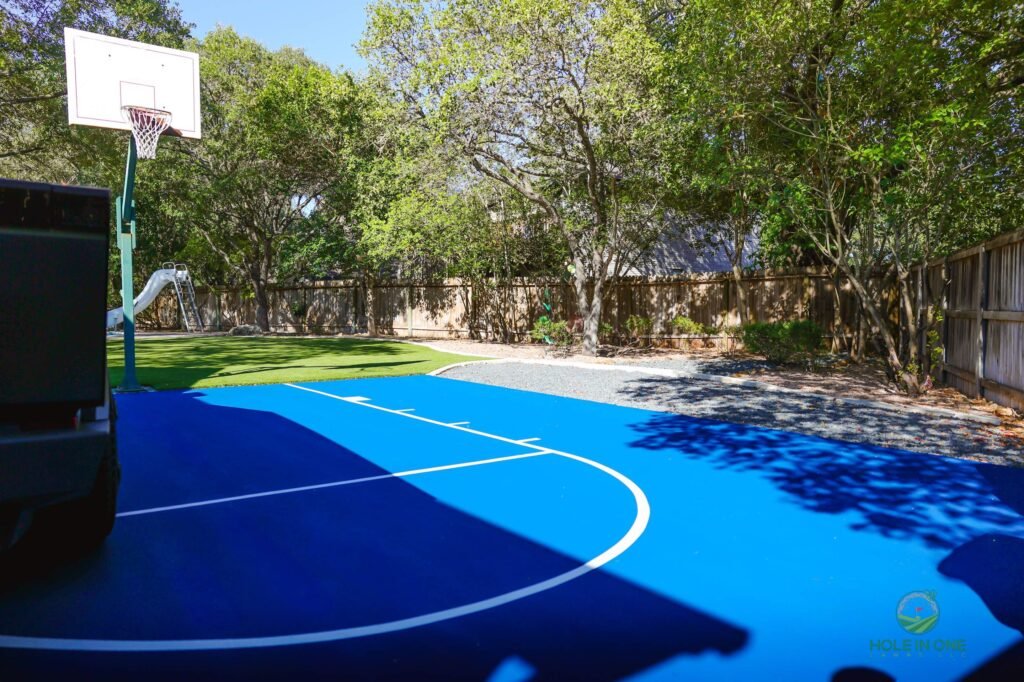
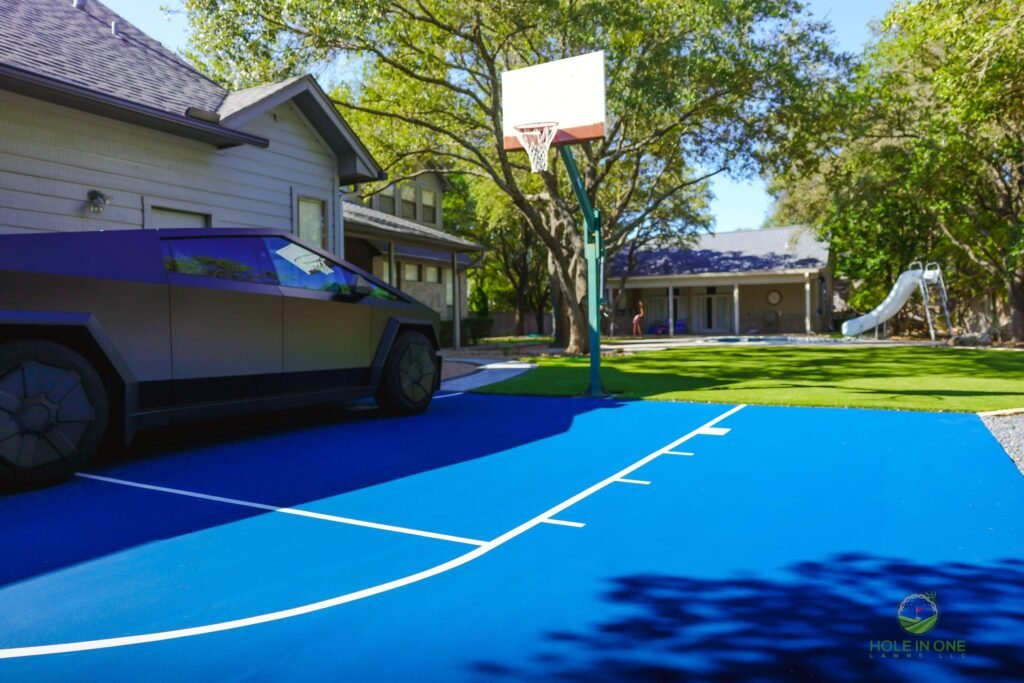
Can the court double as something else? Yes. A multi-use court can include basketball hoops or other game lines, which is popular for families with different interests.
Pickleball, Padel or Multi-Sport?
Not every family wants the same court. Pickleball is the most popular choice for its small footprint and easy learning curve. Padel, played inside glass and mesh walls, is growing quickly and suits homeowners who want something different. A multi-sport court combines pickleball lines with a basketball goal or other games so kids and adults can share the space. During design we talk through who will play, how often and at what times of day, then recommend a layout and surface that fit those habits. Choosing the right format up front avoids costly changes later and makes sure the finished court gets used for years.
Caring for Your Court
A well-built court needs very little upkeep. Blowing off leaves and debris, rinsing the surface a few times a year and keeping nearby irrigation from spraying onto the court will protect the coating. Acrylic surfaces are typically recoated after several years of play, depending on use and sun exposure.
Ready to Plan Your Court?
If you are considering a backyard pickleball court anywhere in the San Antonio area, the best first step is a conversation and a site visit. We will talk through your goals, evaluate the space and map out a design-build plan that fits your yard. Contact our team to get started.

