

Between summer heat, watering restrictions and rising water bills, more San Antonio homeowners are replacing thirsty front lawns with xeriscape. Done well, a xeriscape front yard is not a yard full of gravel. It is a layered, colorful landscape of native and adapted plants, natural stone and smart irrigation that looks good all year and needs a fraction of the water. Here are the front yard xeriscape ideas we use most, with photos from our own projects.
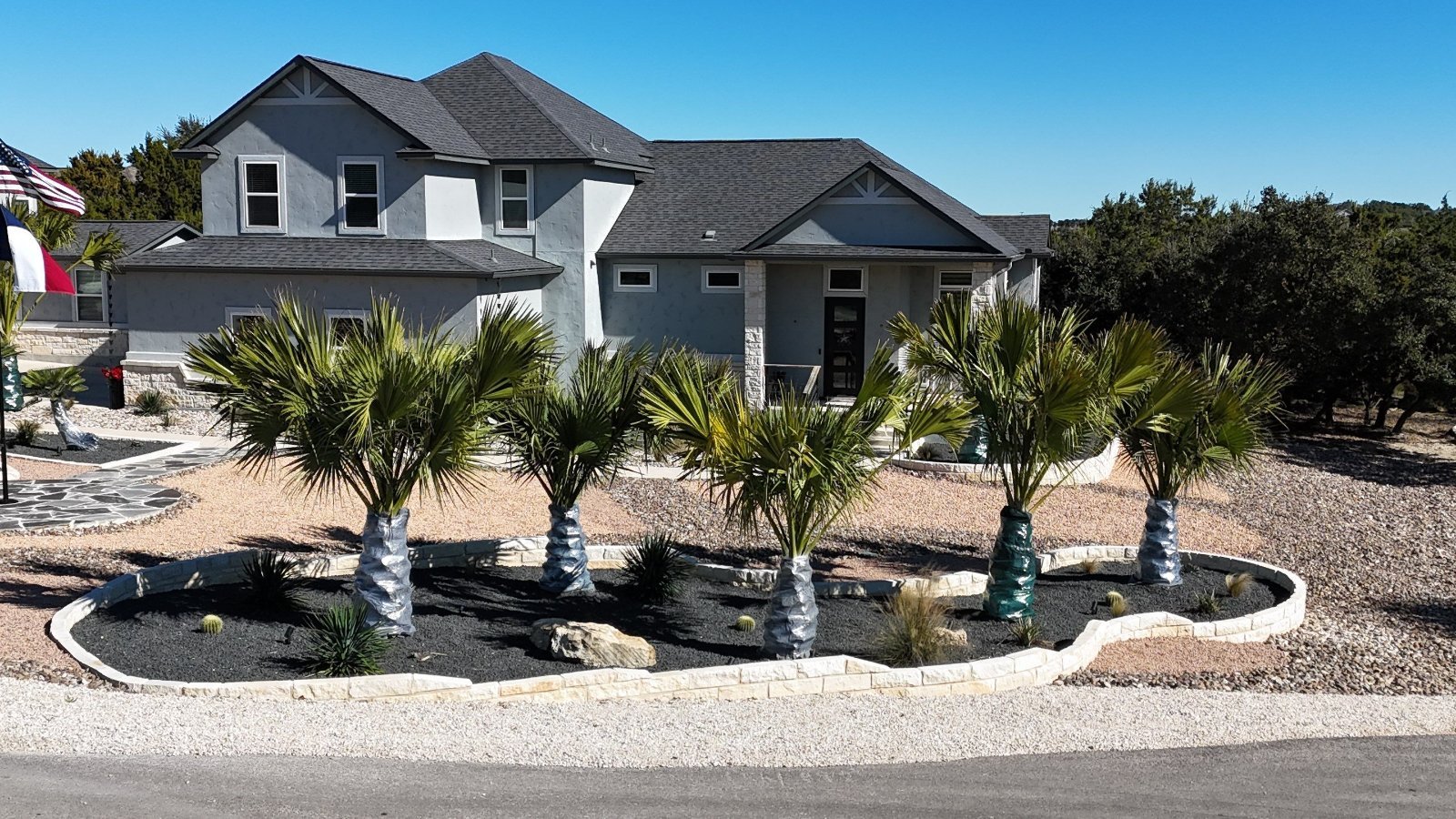
1. Start With Curved Beds, Not a Gravel Sheet
The xeriscapes that look best use curved planting beds edged in limestone or steel, with a smaller area of lawn, turf or decomposed granite between them. Curves lead the eye to the front door and soften the hard lines of the house and driveway.
2. Use Native Limestone and Boulders
Native Texas limestone fits the Hill Country look and costs less than imported stone. A few large boulders, set partly into the ground so they look natural, give the design structure and a place for the eye to rest.
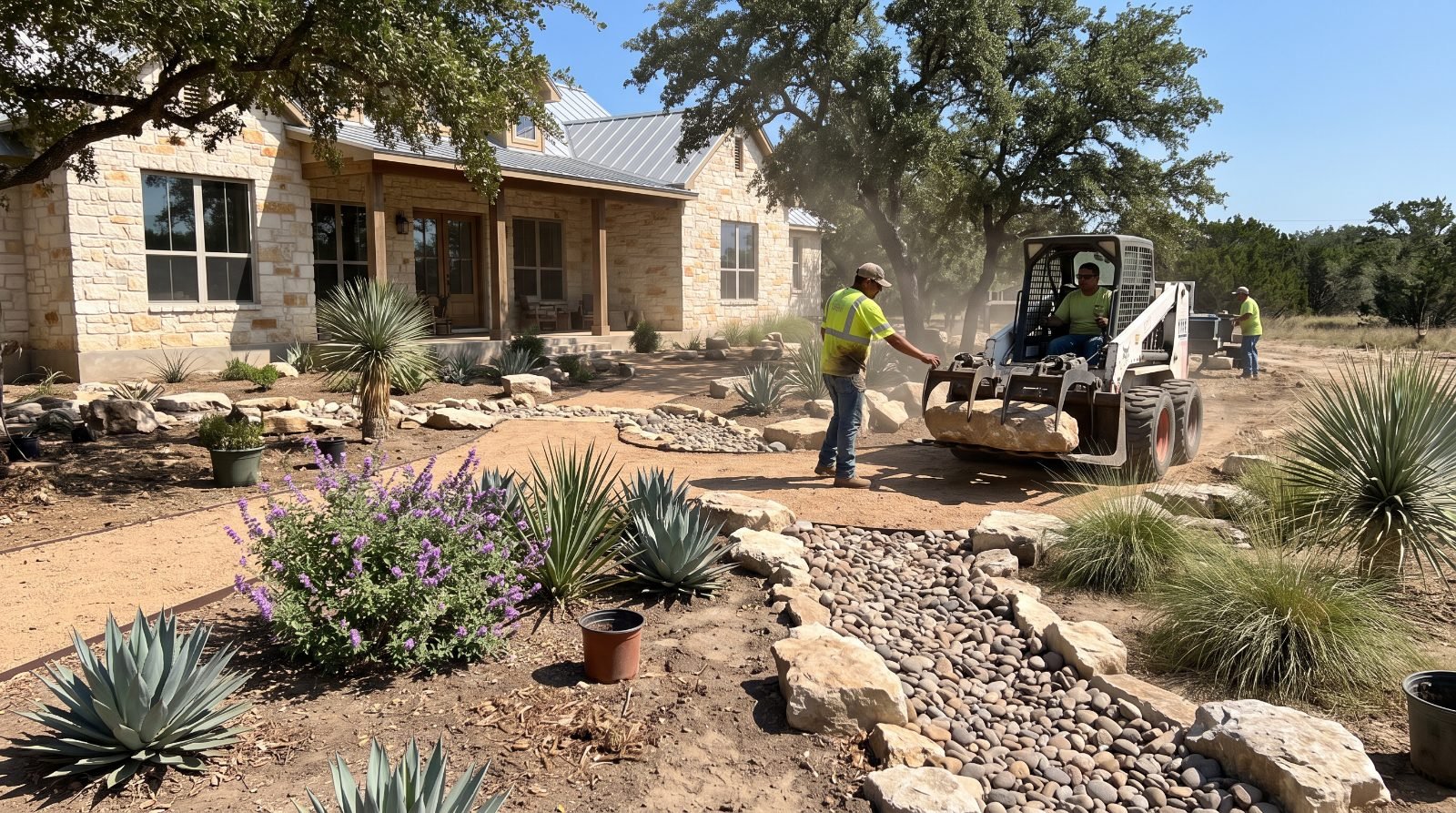
3. Layer Plants by Height
Put taller accent plants such as yucca, sotol or Texas mountain laurel at the back or corners, mid-size shrubs like Texas sage and salvia in the middle, and low groundcovers and grasses at the front edge. Layering keeps the yard full and green-looking even with low water.
4. Pick Proven Plants for San Antonio
- Accents: Yucca rostrata, red yucca, sotol, agave, Texas mountain laurel
- Shrubs: Texas sage, autumn sage, lantana, dwarf yaupon
- Grasses: Mexican feather grass, Gulf muhly, Lindheimer muhly
- Groundcovers: blackfoot daisy, trailing rosemary, silver ponyfoot
Check your HOA’s approved plant list before you finalize, and see our garden design page for more plant ideas.
5. Make the Walkway the Star
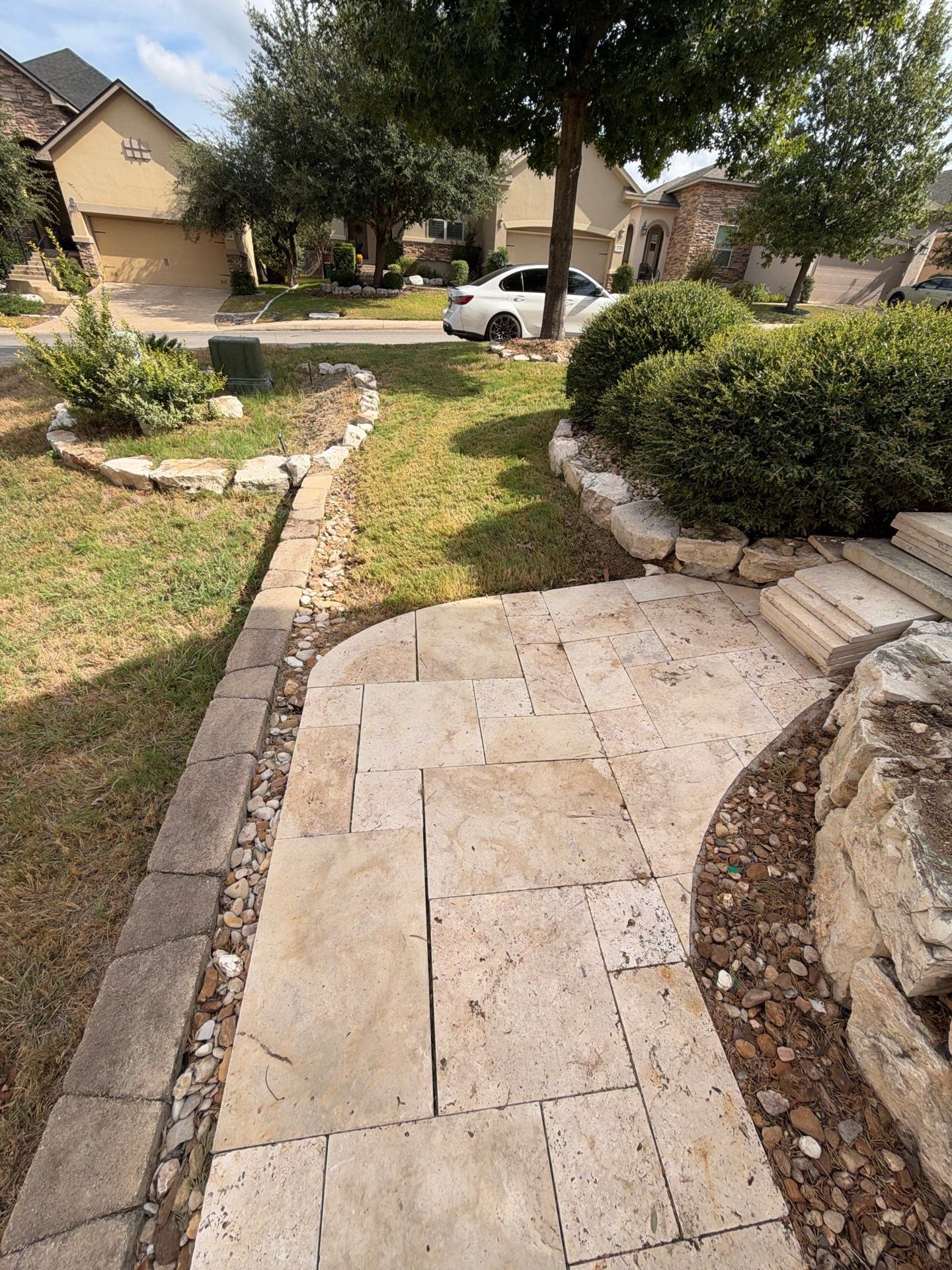
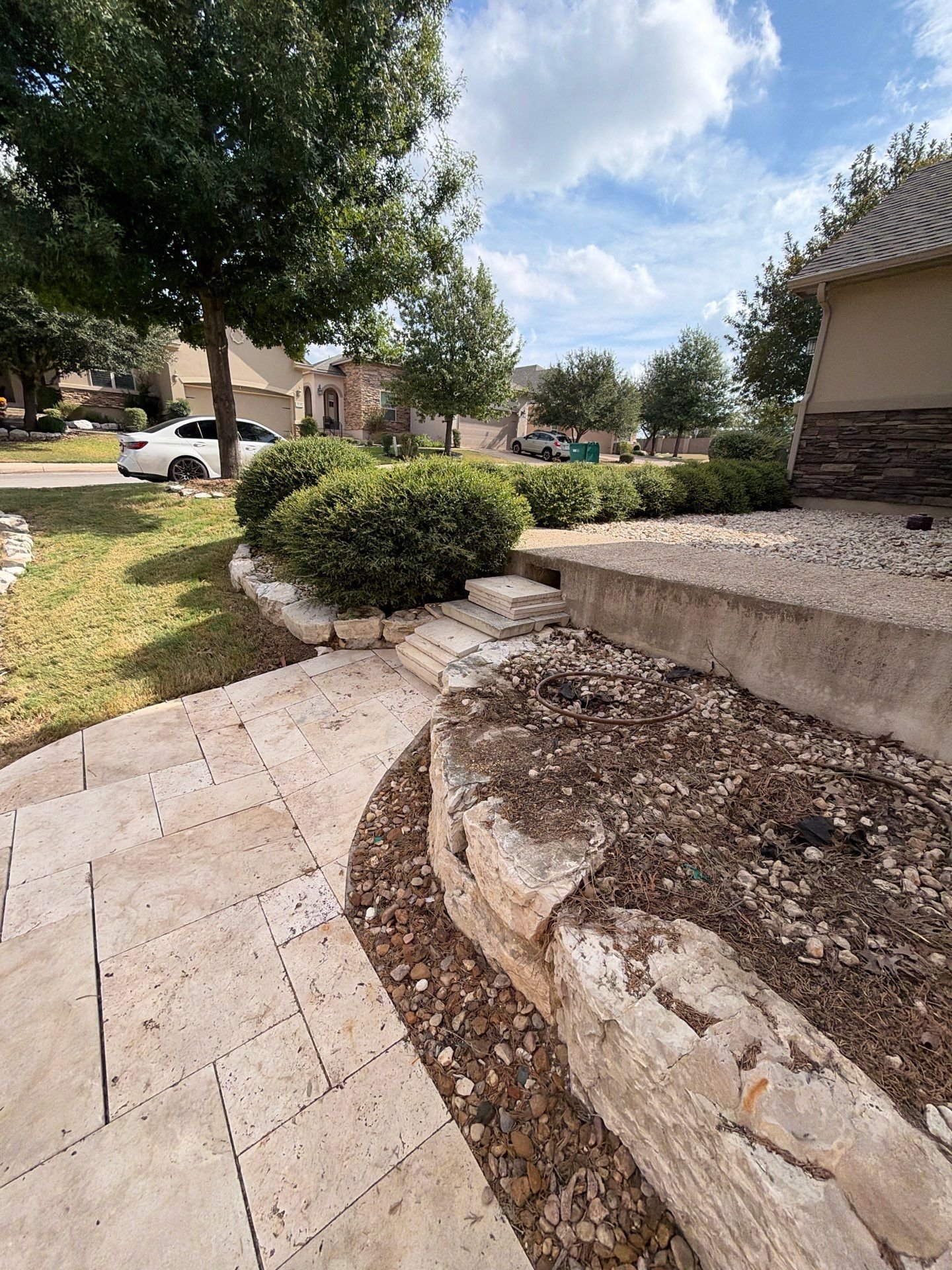
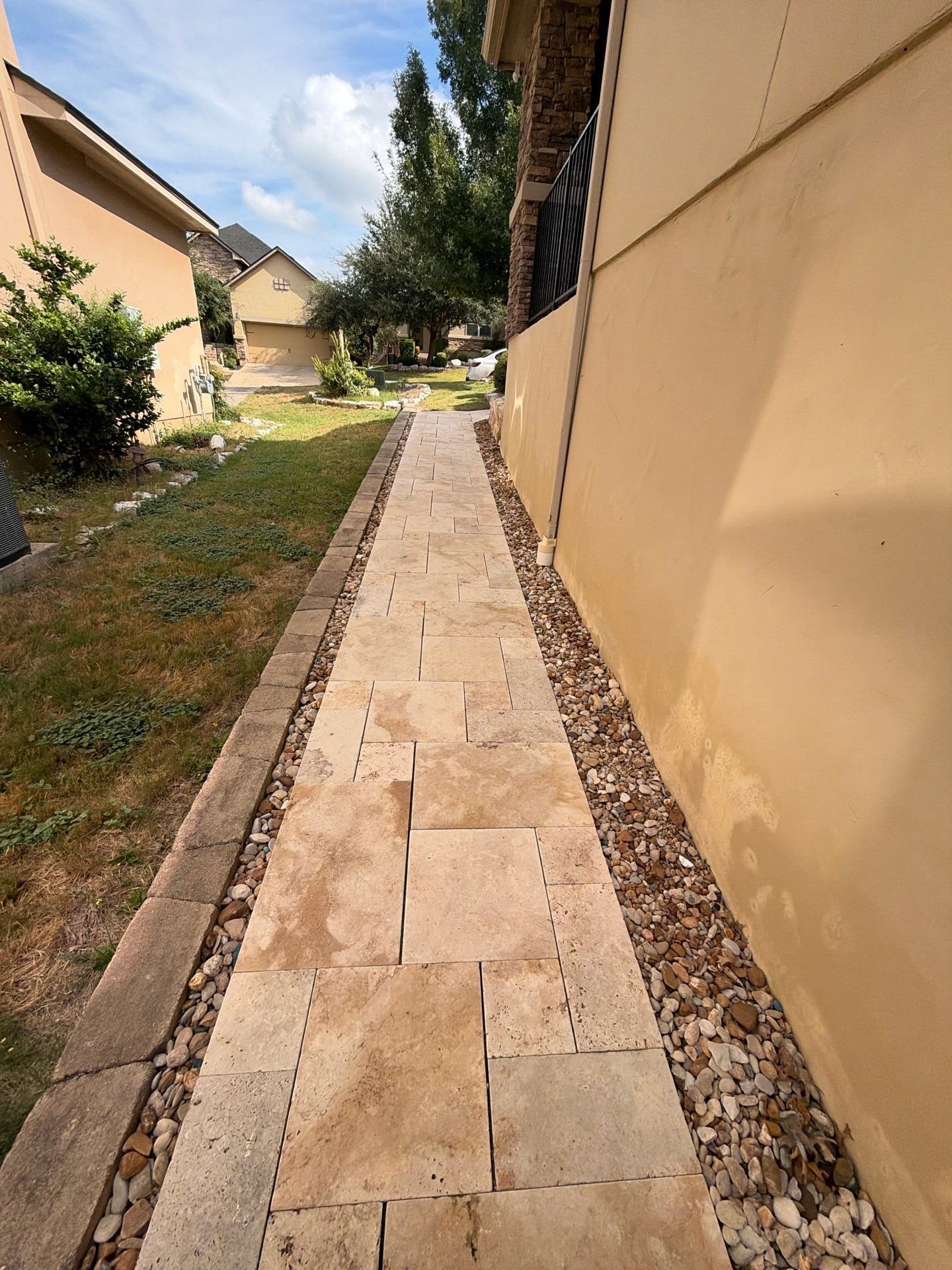
A new front walkway in travertine or pavers, with limestone steps where the grade changes, does more for curb appeal than almost anything else. It also gives the planting beds a clean edge.
6. Mulch and Rock With a Purpose
Use hardwood mulch around plants to hold moisture and feed the soil, and decomposed granite or river rock in paths, dry creek beds and drip edges. A dry creek bed of river rock is both a design feature and a way to move storm water away from the foundation.
7. Convert Spray Heads to Drip
Most of the water savings in a xeriscape come from irrigation. Converting old spray zones to drip puts water at the roots, cuts evaporation and keeps water off the sidewalk. A smart controller adjusts for rain and heat automatically.
8. Keep a Little Green
If you still want a patch of green for kids or pets, consider a small area of drought-tolerant sod or artificial turf framed by the xeriscape beds. You get the soft look of lawn with far less water.
Frequently Asked Questions
Does a xeriscape front yard need watering? New plants need regular water the first season to establish. After that, most native plants need only occasional deep watering, mostly in peak summer.
Will my HOA allow xeriscaping? Many San Antonio HOAs now allow and even encourage it, but most require plan approval. We prepare the plan and plant list for your submittal.
Is xeriscaping low maintenance? Lower, not zero. Expect seasonal trimming of grasses and perennials, mulch top-ups and a quick drip system check a couple of times a year.
Plan Your Xeriscape
For more on our process, visit our xeriscaping in San Antonio page or read our front yard landscaping ideas. Hole In One Lawns is a licensed and insured landscape design-build company, a BBB Accredited Business, and was named 2025 Best Landscape Designer in San Antonio. Contact our team to schedule a design consultation.